Last updated November 17, 2026







Free written scope consultation - allowances, timeline, and change-order rules on paper before a single trade is scheduled
Construction Emergency Preparedness Guide for Mesquite Homes
The most expensive construction emergency in Mesquite history is not fire or flood. It is deferred stucco repair that lets one monsoon season’s water intrusion rot the sheathing behind a wall that looked fine from the street. That pattern repeats here because our hazards are specific: 110-degree summers that cook roof membranes, sudden monsoon bursts that push water into places it has no business being, and expansive caliche soil that shifts a slab after a wet winter. Most emergency prep guides are written for hurricane and blizzard markets. This one is for Mesquite. You’ll learn the three emergencies you’ll actually face, the contacts to save before you need them, how to assess damage safely, and how to protect a claim instead of losing one.
Quick Answer
The three highest-probability construction emergencies for a Mesquite homeowner are heat-driven roof membrane failure, monsoon water intrusion through stucco and window flashing, and slab movement caused by expansive caliche soil. Preparation means documenting utility shutoffs and emergency contacts before an event, knowing what you can safely inspect versus what requires a licensed contractor, and protecting damage with temporary measures and photos so your insurance claim stays valid. Getting a written price and warranty terms from a licensed contractor before emergency season hits is the single most effective step.
Styles & brands we work with
- Kitchen remodeling
- Bathroom remodeling
- Home additions & ADU
- Roofing
- Windows & doors
- Driveway & pavers
- Fence
Table of Contents
- The Three Construction Emergencies Mesquite Homes Actually Face
- Emergency Contacts to Document Before Anything Happens
- How to Do a Safe First-Response Assessment After a Monsoon
- Temporary Protection That Preserves Your Insurance Claim
- What a Written Construction Warranty Should Cover in an Emergency
- Caliche Soil, Slab Movement, and the Warning Signs
- Your Pre-Season Mesquite Home Preparedness Checklist
The Three Construction Emergencies Mesquite Homes Actually Face
Mesquite sits in a corner of Nevada where the Mojave Desert meets the Virgin River corridor. That combination creates a very particular set of building stresses. Roofs bake through months above 105 degrees. Then, usually between July and September, monsoon moisture pushes up from the Gulf of California and drops an inch of rain in an hour onto ground that has spent all summer baked hard. The soil can’t absorb it, so water sheets off and finds every weak point in a building envelope.
Here are the three emergencies we see most:
- Roof membrane failure in extreme heat. Asphalt shingles and low-slope membrane on flat or low-pitch sections age fast under sustained UV and thermal cycling. The failure is often invisible until the first rain, when water appears at a ceiling stain. Our technicians with up to 22 years of experience regularly find that a roof “in fine shape” in April is the one leaking in August.
- Monsoon-driven water intrusion. Most Mesquite water damage does not come through the roof. It comes through stucco cracks, failed window and door flashing, and under-cured sealant. Newer builds in Sun City Mesquite and along the golf course corridors are especially exposed because stucco and elastomeric coatings crack at temperature stress points.
- Slab movement from expansive caliche. Caliche is the calcium-carbonate hardpan that underlies much of the Mesquite area. When it gets wet after a long dry spell, it swells; when it dries, it shrinks. Repeated cycles can crack driveways, pop tile, and wrack door frames. This is a geology problem, not a cosmetic one.
What these three share: they fail quietly, then fail fast. The homeowner who knows the warning signs is the one who catches the problem before it becomes a five-figure repair.
Emergency Contacts to Document Before Anything Happens
During a real event, the internet is the last place you want to be searching. Write this list down, print it, and keep it near your electrical panel. In a water event, you may not have power or a working phone signal.
- Your utility shutoffs. Know where your main water valve is (usually at the meter at the curb, or under a hose bib in older homes). Know your gas meter shutoff and your electrical main breaker. Label them with a paint pen so a family member can find them in the dark.
- Your utility provider’s emergency line. Save the gas utility’s leak hotline and your electrical provider’s outage line to your phone contacts under a name that sorts to the top, like “AAA Gas Emergency.”
- The city of Mesquite’s after-hours line. Your city offices and code enforcement have after-hours contact for issues that involve public safety – a downed line, a broken water main, or a structure that looks unsafe after a storm.
- The Nevada State Contractors Board. Keep their website bookmarked so you can verify a license before you hire anyone who knocks on your door after a storm.
- A licensed contractor you already trust. Call (844) 797-3609 to get on the list for a free estimate. A company you’ve already vetted is worth ten cold calls in a crisis.
- Your insurance agent’s direct line. Not the 800 number on the policy – your agent’s cell.
Your general contractor should be the person you call when construction damage shows up. Keep this list current and you’ll skip the worst hour of an emergency: the one where you’re standing in water trying to figure out who to call.
How to Do a Safe First-Response Assessment After a Monsoon
After a big rain, you want to know how bad it is. You also want to stay alive while finding out. Here’s the safe sequence we recommend to Mesquite homeowners. Do the first two steps before you go inside:
- Check from outside first, and do not enter if anything looks wrong. Walk the perimeter. Look for sagging rooflines, bulging stucco, cracked exterior walls, and water pooling at the foundation. If a wall looks bowed or a ceiling looks like it has a water “belly,” stay out and call a professional. Structural damage is not a DIY inspection.
- Turn off utilities if you suspect water is near electrical or gas lines. Shut the gas at the meter if you smell it. Kill the main breaker if water is anywhere near the panel. This is not a step to improvise – if you’re unsure, leave it and call the utility.
- Document as you go. Photograph and video every affected room before you move anything. Open a note on your phone and record the time, date, and what you saw.
- Check ceilings, then walls, then floors. Water travels. A stain on a downstairs ceiling usually means a leak two floors up. Note the location of every stain and ring.
- Look for the “three I’s” – ice, inspection, intrusion. In our climate you’ll skip ice, but check for water intrusion at every window and door, and get an inspection scheduled if you see anything beyond a cosmetic drip.
What you should not do: pull damp drywall out to investigate, climb on a wet roof, poke at a sagging ceiling, or start tearing out flooring. Those are the steps most likely to turn a manageable claim into a structural emergency. We’ve seen Mesquite homeowners turned a small leak into mold damage by opening walls themselves before a contractor saw it.
Temporary Protection That Preserves Your Insurance Claim
Here’s why tarping and boarding matter beyond keeping water out: most insurance policies require the homeowner to take “reasonable steps to prevent further damage.” Do too little and the insurer may reduce the claim. Do too much, in the wrong way, and you can create coverage problems or void it entirely. The line is narrower than people think.
These steps preserve your claim:
- Document everything before and after each protective step. Photos of the damage, photos of the temporary cover, photos of the material receipt.
- Save every receipt. Tarps, plywood, plastic sheeting, shop-vac rental. Keep the itemized receipts; temporary protection costs are commonly reimbursable, but only if you can prove the spend.
- Use plywood and heavy-duty tarps, and secure them well. A tarp that blows off and damages the neighbor’s roof is a new problem, not a solved one.
- Don’t do permanent repairs before the adjuster sees the damage. Boarding a window is protective. Replacing the window before the adjuster photographs it can look like repair and can reduce your settlement.
- Keep a written damage log. Note the date, time, weather, what you saw, and what you did. Insurers respond well to a clean paper trail.
We’ve handled enough storm claims in Mesquite to know the difference between a claim that sails through and one that fights: documentation. If you’re unsure whether a step counts as “protection” or “repair,” call us before you start – free estimates and honest advice cost you nothing.
What a Written Construction Warranty Should Cover in an Emergency
A warranty that only covers “defects in workmanship” is nearly useless in an emergency. What matters is response. A real written warranty commits the contractor to act – and says exactly how to invoke it, so there’s no gray area when a pipe lets go or a roof opens up.
In a written construction warranty, look for:
- A clear coverage window in days, not adjectives. “365 days from the completion date” is coverage. “Backed by our guarantee” is not.
- Stated exclusions. What’s not covered – usually damage from acts of God, homeowner neglect, or third-party work – should be listed plainly so there are no surprises.
- An emergency response clause. The warranty should name a phone number you can call any time, with a live person answering, and a stated response process.
- An invocation procedure. How exactly do you file a claim? Email, phone, or written notice? What information do you need to provide? A warranty with a vague “contact us” clause is a warranty you’ll fight over.
- A free return visit for failed repair. If a repair or installation fails within the coverage period, a written guarantee should obligate the contractor to return at no charge.
Mason Remodeling carries a 365-Day Done Right Promise: if the work isn’t right within a year of completion, we make it right at no cost to you. That covers the emergency case too – if a repair fails, we come back. The key is that the terms are in writing before any work starts. That’s the standard every Mesquite homeowner should demand from any contractor before signing. To get that written guarantee applied to your project, call us for a free estimate.
Caliche Soil, Slab Movement, and the Warning Signs
Caliche doesn’t show up on most homeowner radar, but it drives a lot of structural repair around Mesquite. The hardpan layer sits under much of the area and behaves very differently wet versus dry. During snowmelt or monsoon season, it takes on water and expands; during our long dry stretches, it contracts. A foundation built before that behavior was understood can move by inches over years.
Warning signs to watch for:
- Cracks in drywall that appear at the corners of doors and windows and grow wider over time.
- Doors and windows that stick in one season and swing free in the next.
- Tile or flooring that cracks along a straight line, especially in a slab-on-grade home.
- Separations where interior walls meet ceilings or where the slab meets exterior stucco.
- Any newly angled slope in a room you can feel underfoot.
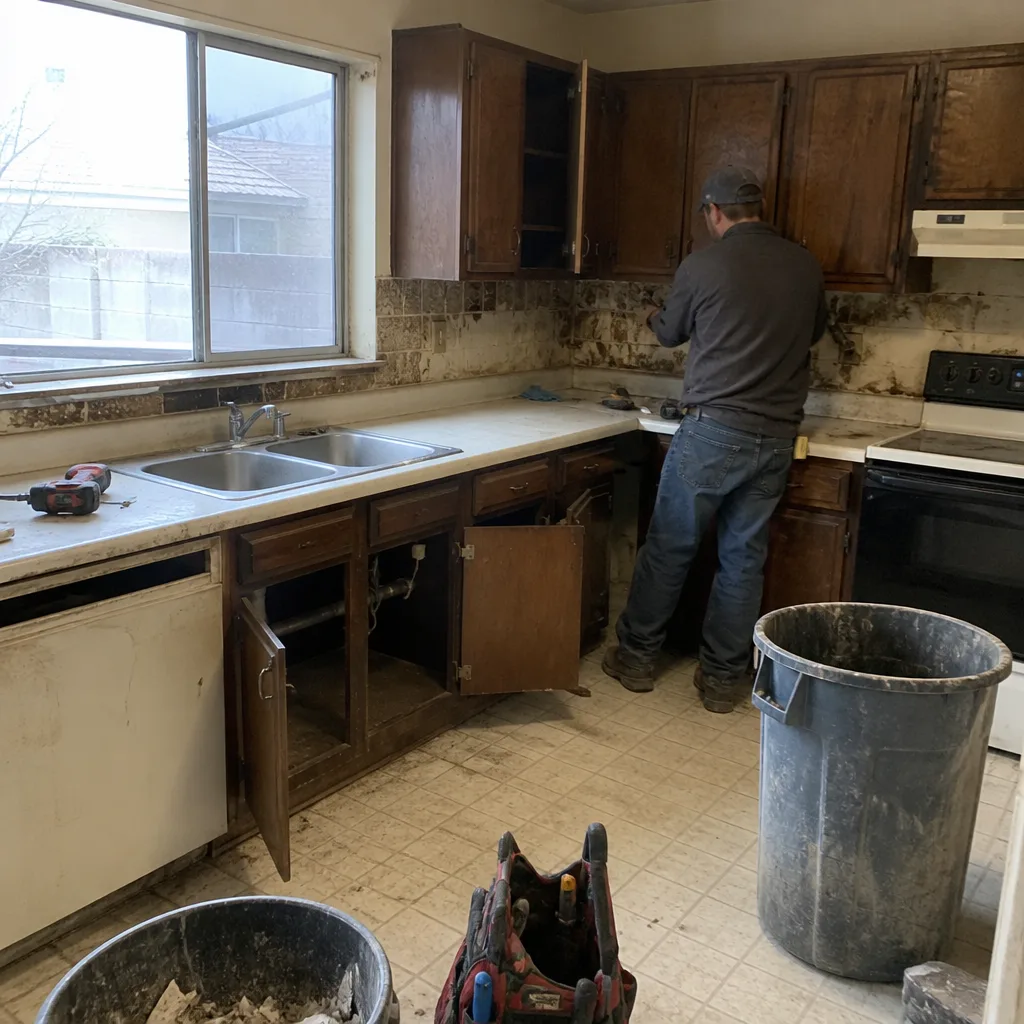
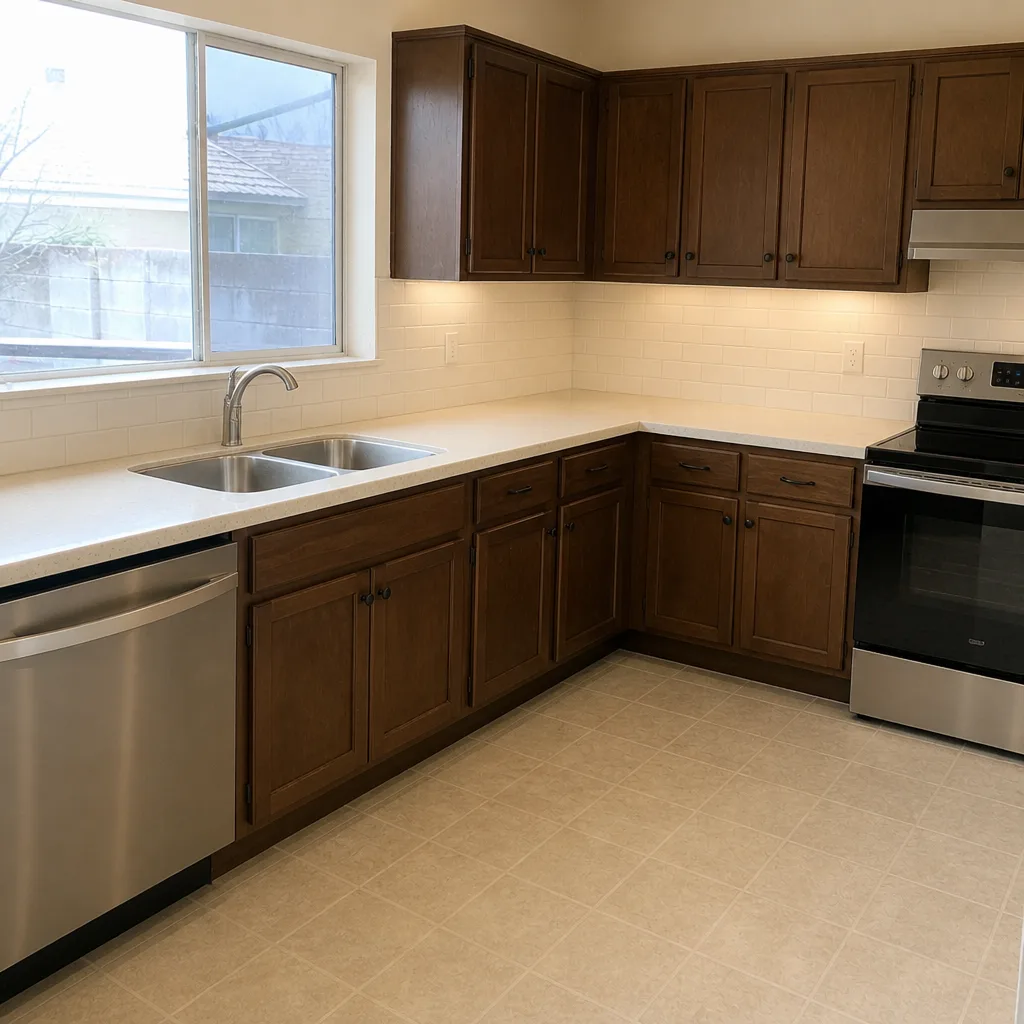
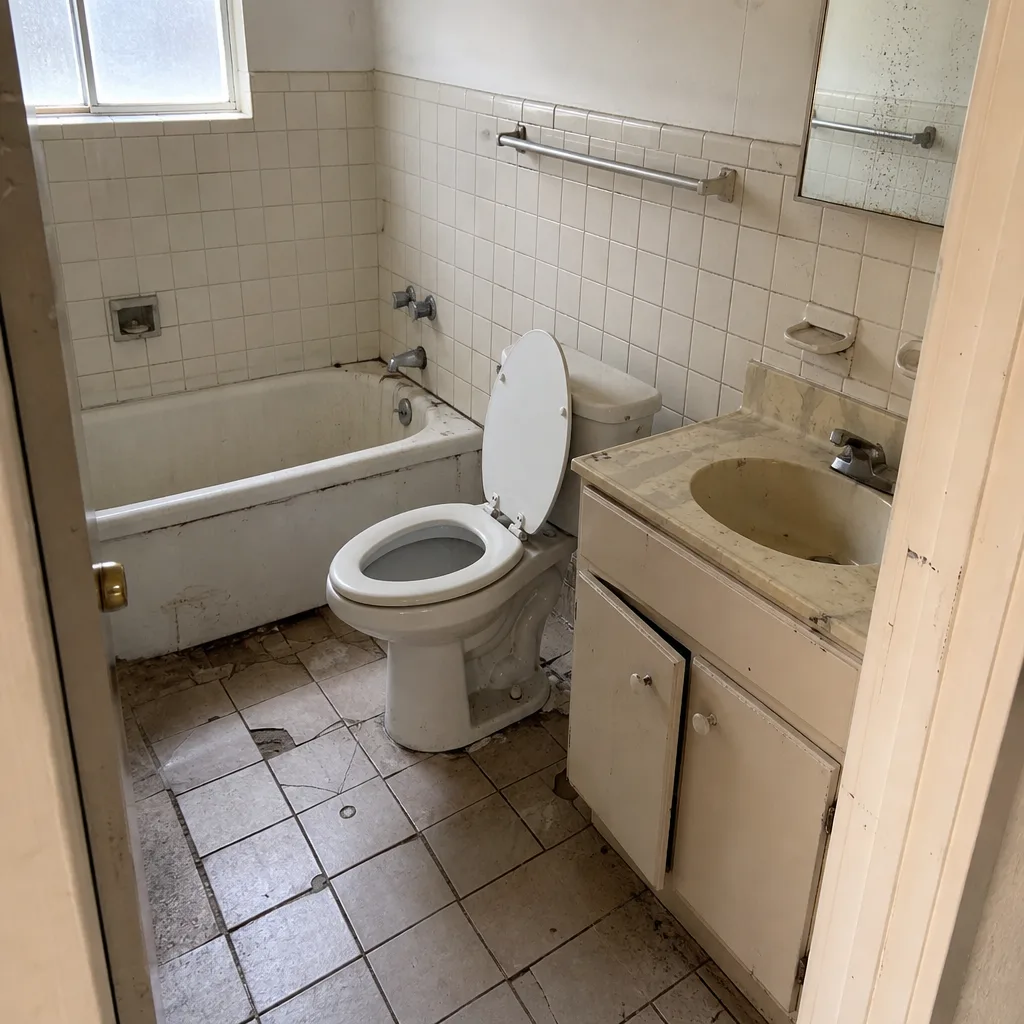
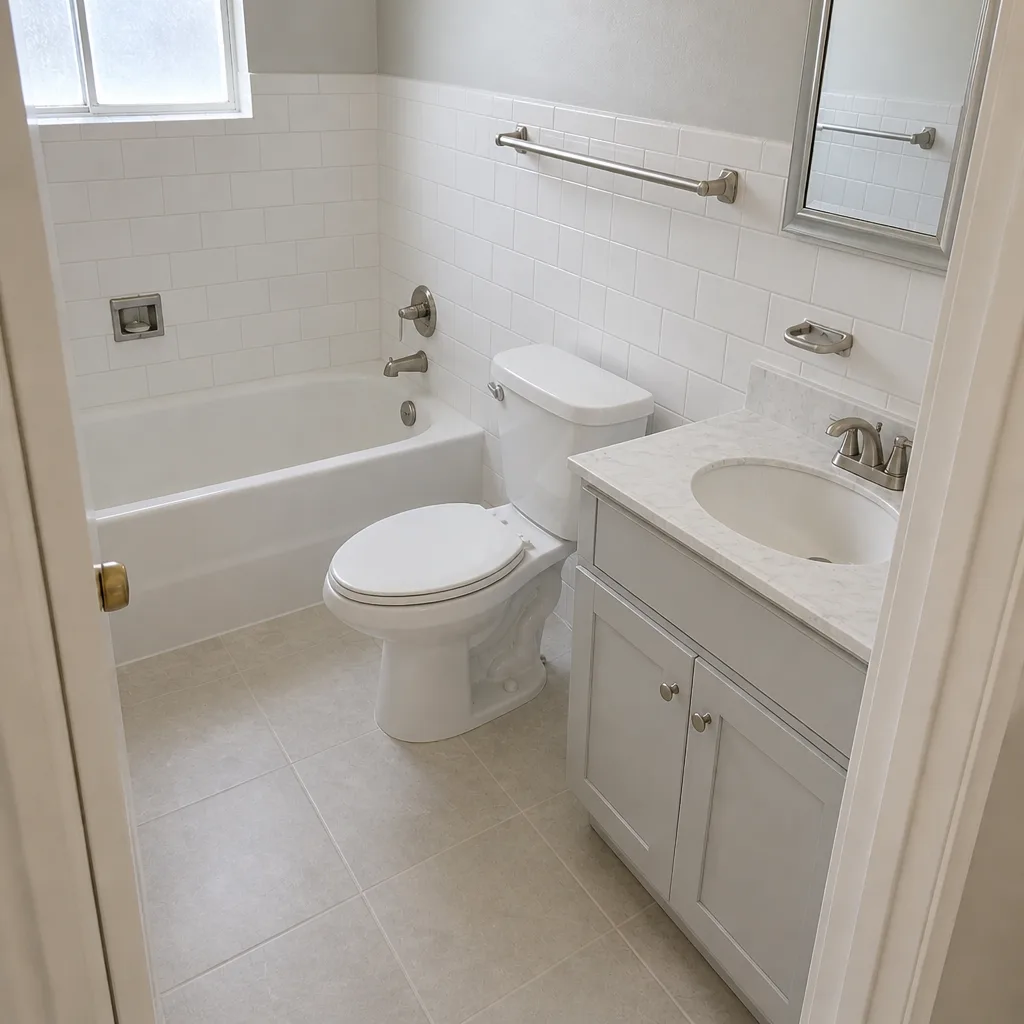
The fix for caliche-driven movement isn’t cosmetic. Repointing a crack while the slab is still moving is money thrown away. A licensed contractor (or structural engineer) needs to determine whether the movement is settling into equilibrium or still active before anyone patches anything. This is exactly the kind of “looks like a small job, is actually structural” problem we’ve handled in Mesquite for years. When we look at a home, we look at the movement pattern, not just the crack. If you’re thinking about a bathroom remodel or kitchen work, get the foundation checked first. It’s cheaper to fix the slab before the new tile. That’s why our Bathroom Remodeling in Mesquite process starts with a structural walkthrough.
Your Pre-Season Mesquite Home Preparedness Checklist
Run through this once a year, ideally in late spring before the first 100-degree days. It’s an hour of work that can save thousands:
- Photograph and video every room and the exterior. Store the files in the cloud. This is the baseline for every future claim.
- Walk the roof from the ground. Binoculars work. Look for lifted shingles, cracked sealant at roof penetrations, and debris. Do not climb up yourself – especially not on a hot roof.
- Inspect stucco and sealant at every window and door. Cracks wider than a credit card, gaps in elastomeric coating, or failing caulk should be addressed before monsoon season. Have a professional handle the repair and crack-sealing; a caulk job that fails in week one is worse than no job.
- Check window and door frames for water staining. Look for bubbling paint and soft wood. Windows from brands like ES Windows and Therma-Tru are built for our climate, but flashing installation is what fails, not the unit itself.
- Clear your roof drainage and gutters if you have them. Many Mesquite homes are flat-roof or minimal-pitch, and ponding water is an emergency in waiting.
- Make sure your exterior paint and coating schedule is up to date. UV degradation is the quiet killer of every finish on a Mesquite home.
- Have your roof inspected by a licensed roofing contractor. A formal inspection once a year catches the failure before the leak. Our team handles this as part of a General Contractor in Mesquite service visit.
One important note: the best time to plan a replacement is before the emergency. If your inspector puts your roof at five years left, don’t wait for the leak. Schedule the replacement during a mild window in your calendar. A planned Kitchen Remodeling in Mesquite project, for example, is far easier to coordinate when no storm damage is competing for the contractor’s attention. If you’re planning multiple projects, our Mason Remodeling Mesquite home page shows how we phase emergency repairs alongside planned remodel work.
Common Mistakes to Avoid
- Hiring the first contractor who knocks after a storm. Storm chasers follow weather events. Verify a license with the Nevada State Contractors Board before you sign anything. A deal that arrives in a truck you can’t trace is a deal you can’t enforce.
- Tarping without documenting. A tarp on the roof with no photos of the damage underneath is a claim the adjuster can’t verify. Photograph first, tarp second.
- Opening walls to “see what’s wet.” This is the highest-cost mistake we see. Let a licensed contractor do the destructive testing; you’ll be glad you did when the claim gets approved in full.
- Assuming the small ceiling stain will dry out. In Mesquite, it won’t. Heat and monsoon humidity are perfect for mold. A stain that isn’t investigated is a repair that gets bigger.
- Ignoring stucco cracks because they’re “just cosmetic.” That hairline crack is exactly where monsoon water enters the wall. It’s the single most common pathway to the sheathing rot described at the top of this guide.
- Not knowing where your main water shutoff is. Every minute the water runs is added damage. Know the valve location before you need it.
- Skipping the written warranty. If the contractor won’t put the terms in writing, you don’t have a warranty. That’s how you end up paying twice for the same repair.
See the difference
 Before
 After
 Before
 After
 Before
 After
When to Call a Professional
Some things you can handle yourself: a small drip at a faucet, a loose shingle, a stubborn window. But several emergencies are genuinely dangerous and should not be attacked as DIY projects. Call a licensed contractor if you see any of the following: a sagging or water-stained ceiling, a bowed exterior wall, any water near an electrical panel or gas line, a roof membrane that’s visibly lifting or open, a slab crack that is wider than a quarter-inch or clearly growing, or any sign of active movement in a foundation. Never climb onto a roof to inspect or repair during or right after a storm, and never attempt to re-enter a structure that looks unstable.
Mason Remodeling offers free estimates in Mesquite. Call (844) 797-3609 – 24 hours a day, a live person answers. We’ll document the damage, give you a written price, and tell you exactly what the repair involves before any work begins.
Frequently Asked Questions
Monsoon water intrusion through stucco cracks and window flashing is our most frequent construction emergency, followed by heat-driven roof membrane failure. The common thread is that both are documented for months before they become visible. Call (844) 797-3609 for a free inspection estimate before the rainy season.
You can protect your home with a tarp, but only if it is safe to be on a roof, which usually means waiting for conditions to clear, and only after you have photographed every inch of damage. If the roof looks visibly compromised, do not go up. Call a licensed contractor to board or tarp it – temporary protection costs are commonly reimbursable, but an unsecured tarp that blows off and causes further damage is a claim problem.
Small, cosmetic patching is generally fine for a homeowner, but water intrusion behind walls and any tile or structural repair tied to a leak should be done by a licensed contractor. Nevada requires licensure for many construction trades, and a remediation job that looks simple can quickly involve mold, sheathing rot, or structural movement that would be dangerous to repair without proper knowledge and equipment.
Look for cracks that widen over time at door and window corners, doors that bind in one season and swing free the next, and straight-line tile cracks on slab-on-grade floors. Any of those warrant a licensed contractor’s inspection to determine whether the movement is still active. Foundation repair is not a DIY project. Call (844) 797-3609 for a professional assessment.
A proper written warranty names the coverage period in exact days (for example, 365 days from completion), lists the exclusions, names the phone number to call for a failed repair, and describes how a claim is filed. Invoke it in writing, with photos and dates, and keep proof you did so. If the contractor won’t put the terms in writing before the work starts, you don’t have a warranty. Call us and we’ll walk you through the terms.
If your home has active stucco cracks, an aging roof, or a foundation that has already shown signs of movement, yes, it is at heightened risk, because monsoon rain finds those weaknesses and drives water into the wall cavity or under the slab. Have the exterior inspected before the season, and document any visible damage after the event to support a claim. Call (844) 797-3609 for a free estimate.
The Bottom Line
The emergencies that cost Mesquite homeowners the most are the quiet ones: a stucco crack that lets one monsoon’s water into the sheathing, a roof sealant that fails after a hot summer, a caliche-driven slab that was moving before you patched it. Preparing for them takes three things. Know your shutoffs and contacts in advance. Document your home before an event and protect damage without voiding the claim. Then choose a licensed contractor whose written price and written warranty bind them to respond in an emergency.
Mason Remodeling Mesquite offers that written price and the 365-Day Done Right Promise. Call (844) 797-3609 to schedule your free estimate and get your home ready before the season, not after it.
Written by the team at Mason Remodeling Mesquite.