Last updated November 17, 2026


Free written scope consultation - allowances, timeline, and change-order rules on paper before a single trade is scheduled
DIY vs Professional Construction: The Mesquite Homeowner’s Decision Guide
Nevada gives homeowners more legal room to build on their own property than most states do, and that freedom trips up a surprising number of Mesquite homeowners every year. The trap isn’t the work itself. It’s what happens when a self-performed project bumps up against a permitted one, an insurance claim, or a home sale. In our experience across Mesquite, the jobs that go wrong aren’t the ones where someone lacked skill with a paintbrush. They’re the ones where someone saved $3,000 on a DIY shower and lost $18,000 at resale because the tile pan was never waterproofed to desert standards. This guide draws a clear line between the DIY that genuinely saves money and the DIY that quietly builds liability, so you can decide with real numbers instead of guesswork.
Quick Answer
In Mesquite, DIY makes sense for cosmetic work that triggers no permit: interior paint, fixture swaps inside existing plumbing and electrical rough-in, landscaping, and demolition after abatement checks. It stops making sense the moment the work involves structural changes, waterproofing assemblies, insulation performance, HVAC, electrical panels, or gas lines. Those categories carry permit exposure, warranty consequences, and desert-specific performance demands that amateur work rarely meets, and the cost of getting them wrong usually exceeds what a professional would have charged.
Styles & brands we work with
- Kitchen remodeling
- Bathroom remodeling
- Home additions & ADU
- Roofing
- Windows & doors
- Driveway & pavers
- Fence
Table of Contents
- What Nevada’s owner-builder law actually allows
- How DIY permits can follow your home for five years
- Why desert construction raises the cost of DIY error
- Three common Mesquite DIY projects, costed out
- Where DIY genuinely makes sense
- The warranty void risk nobody warns you about
- Which Mesquite projects need a permit
- A five-question test before you start
What Nevada’s owner-builder law actually allows
Nevada law lets a homeowner act as their own general contractor on a primary residence. You can pull what’s called an owner-builder permit, hire subcontractors yourself, and supervise the work. On paper, that looks like a wide-open door to significant savings, because general contractor overhead and markup typically run a meaningful percentage of a project’s total cost.
What the law restricts matters just as much as what it allows:
- Primary residence only. Owner-builder permits are for the home you live in. Rental property and speculative builds fall under contractor licensing rules.
- You become the responsible party. If a subcontractor you hired does defective work or skips a required inspection, the code violation lands on you as the permit holder, not on them.
- You are the general contractor. That means scheduling trades, sequencing inspections, and holding the warranty. Nobody is coordinating your plumber and your tile setter except you.
- Disclosure at sale. Work you performed as an owner-builder can require disclosure when you sell, and some buyers and lenders treat self-permitted work as a red flag worth a price concession.
Here’s the part most people miss. The moment a licensed contractor touches a project, any adjacent homeowner-performed work on that same project is held to the same code standard. If you tiled a shower yourself and then hired a licensed contractor to set the vanity and fixtures, an inspector who finds the shower pan out of compliance can fail the whole permit. That’s the compliance problem a mid-project DIY pivot creates, and it’s the single most common reason Mesquite homeowners call us to untangle a job they started themselves. The general contractor in Mesquite handling permitted work has to build to code, and code doesn’t grade on whether you were trying to save money.
How DIY permits can follow your home for five years
Owner-builder work doesn’t vanish when the tools get put away. It sits in the permit record, and that record surfaces during a sale. Nevada’s owner-builder provisions create a window where self-performed work carries real resale exposure, and five years is the practical horizon most real estate professionals in Mesquite work around. Inside that window, a buyer’s agent will pull the permit history. Unpermitted or owner-builder work stands out, and it invites negotiation.
A direct answer to the question we hear most: can you sell a home with owner-builder work in Nevada? Yes, but the work must be disclosed, and the buyer can require corrections, credits, or a price reduction to cover the risk. In a competitive market that credit is usually small. In a soft market it can be substantial, because the buyer knows they’re the one absorbing the risk of a failed inspection or an insurance question down the road.
There’s a second layer. Homeowner’s insurance can be affected by self-performed work that wasn’t inspected or permitted. If a water heater you installed yourself leaks and damages flooring, or a deck you built yourself pulls away from the house, the claim review gets complicated. Insurers ask who performed the work and whether it was permitted. Those are uncomfortable answers to give after a loss.
We’ve seen this play out on resale in Mesquite communities where homes turn over relatively quickly. A homeowner finishes a basement conversion or an added bathroom as an owner-builder, enjoys it for three years, then discovers at listing that the unpermitted square footage isn’t counted in the appraisal and the buyer wants it credited twice over. The savings evaporate at closing.
Why desert construction raises the cost of DIY error
This is where Mesquite differs from a milder climate, and it’s the part DIY guides written for a national audience get wrong. Work that’s forgiving in a moderate climate has to hit a higher performance bar here. Mesquite sits in the Mojave with summer highs routinely over 110 degrees, single-digit humidity most of the year, intense UV, and a monsoon season that delivers sudden heavy rain onto sun-baked ground that sheds water quickly. Every one of those conditions stresses construction, and every one of them raises the cost of an amateur mistake.
Insulation has to perform against extreme heat gain, not just cold. Undersized or poorly installed insulation in an attic or a wall cavity doesn’t just make a room uncomfortable; it drives cooling bills up for the life of the home and shortens the life of the HVAC equipment by making it run harder. In a Mesquite attic, insulation installed with compressed batts or gaps at the eaves loses much of its rated value.
Exterior waterproofing is counterintuitive in the desert. It rains rarely, which makes people assume waterproofing is a low priority. The opposite is true. Sun-baked stucco and cracked sealant let water in during a monsoon, and hit-and-run downpours expose any flaw in a roof-to-wall transition or a shower pan at once. Desert waterproofing has to withstand long dry baking followed by sudden saturation, which is a harder test than steady, moderate moisture.
HVAC sizing and installation are unforgiving here. A system that’s slightly oversized or short on return air capacity in a mild climate still works. In Mesquite, an undersized return duct or a sloppy refrigerant line install can mean a system that never keeps up in July and fails years early. That’s not a comfort problem. It’s a $12,000 problem, done twice.
The through-line: in a moderate climate, a small DIY imperfection costs a little performance. In Mesquite, the same imperfection accelerates wear and fails faster. The margin for error is thinner, so the cost of error is higher.
Three common Mesquite DIY projects, costed out
Numbers make the decision concrete. These are the ranges we see in the Mesquite market, and they’re line-item costs a homeowner can compare against a written professional price. Get the professional price in writing before you decide, every time.
1. Tile installation
A DIY floor tile job on a small bathroom or entry runs roughly $900 to $1,600 in materials alone once you’ve bought thin-set, grout, backer board, a wet saw, spacers, and the small tools. A professional install in Mesquite for the same footprint typically lands in the $2,500 to $4,500 range including materials and labor, depending on tile choice. The spread looks like a $1,500 to $2,900 saving, which is why people try it.
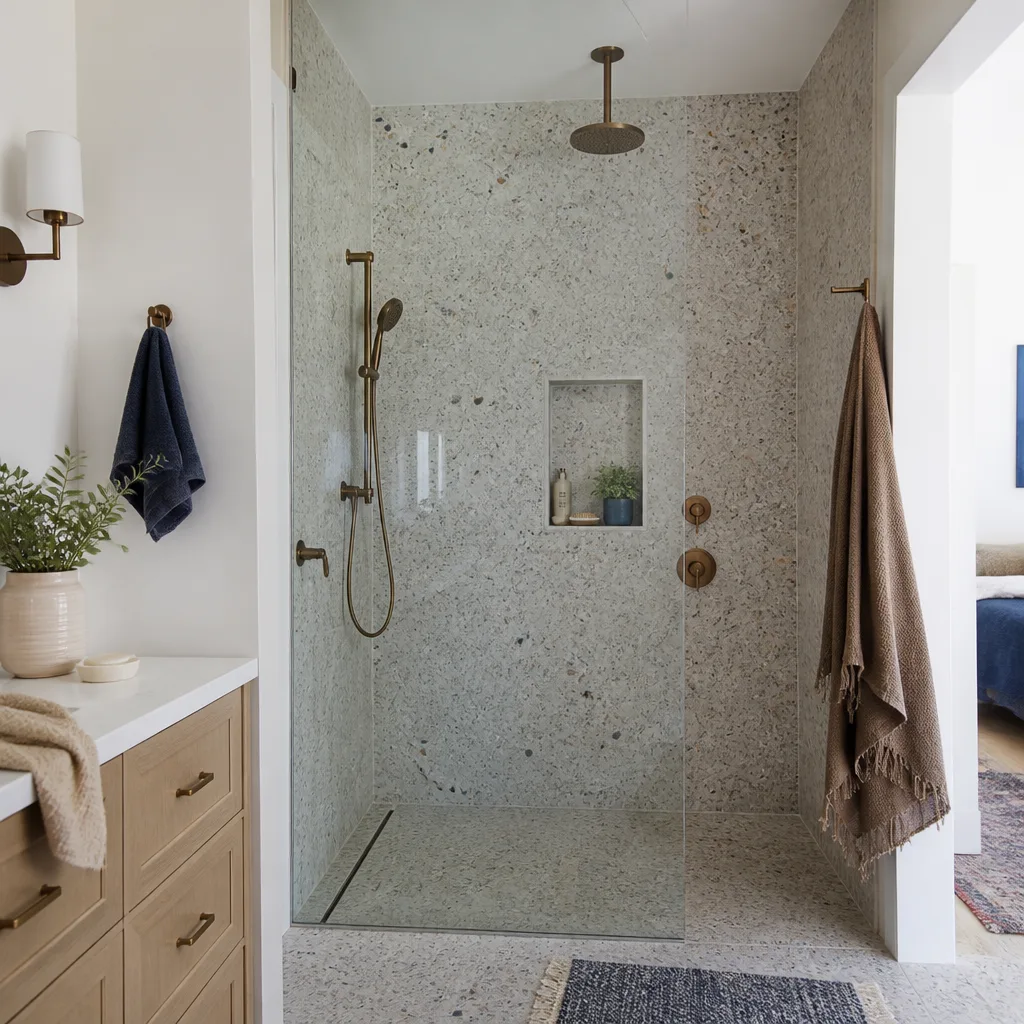
The problem is the flaws you can’t see. A shower or a slab-on-grade floor in a desert home needs a proper decoupling layer and, in wet areas, a waterproofing membrane. Get the substrate preparation wrong and the tile cracks along a control joint within two summers of thermal movement. Get a shower pan wrong and the failure shows up as a soft spot or a musty smell long after the warranty window closed. The visible tile is the easy part. The assembly underneath is the job.
2. Interior painting
This is the strongest DIY candidate on the list. A typical interior repaint in Mesquite runs $3,000 to $6,000 professionally for an average home, and paint and supplies for a DIY version run $400 to $900. The skill required is low, the risk is cosmetic and reversible, and the failure mode is a visible lap mark. If you have the time and the patience for proper prep, taping, and two coats, this is where DIY is genuinely rational.
3. Deck or patio cover construction
A DIY deck in a Mesquite backyard typically costs $3,000 to $7,000 in materials for a modest build, versus roughly $12,000 plus professionally for a permitted, engineered cover. The gap is tempting. But decks and patio covers are structural, load-bearing, and permit-triggering, and in Mesquite they have to resist sun and wind loading that a mild-climate build doesn’t. Fastener and flashing details determine whether the connection to the house survives a monsoon. We’ve seen post bases set with the wrong anchor for the soil and the temperature swing, and the correction costs more than building it right once. This is a professional project, and the fencing around it should use real materials too. Powder-coated steel panels from a brand like Ameristar or a wood-composite line from Barrette hold up to UV far better than untreated lumber.
Where DIY genuinely makes sense
We’re not in the business of talking every homeowner out of a paint roller. Here’s where you can work with confidence:
- Cosmetic work with no permit trigger. Interior paint, wallpaper, cabinet refinishing, light fixture swaps on existing wiring, and swapping a faucet or shower trim inside existing rough-in. None of these change the structure or the mechanical systems.
- Fixture swaps within existing rough-in. Replacing a Kohler or Moen faucet with a compatible one, changing a toilet with the same rough-in dimension, or swapping cabinet hardware. You aren’t moving anything behind the wall.
- Landscaping and hardscaping. Planting, mulching, drip lines tied into an existing irrigation system, and laying pavers on a properly prepared base. Real paver systems from a brand like Belgard or Techo-Bloc make the outcome last, and prep is the part that separates good from bad.
- Interior demolition with proper abatement checks. Pulling out cabinets and flooring before a remodel is real, satisfying work. First, though, have any pre-2000 home checked for asbestos in flooring, adhesives, and insulation, and confirm your painting is lead-safe. Abatement isn’t a DIY task. Demolition after abatement is.
What ties these together: no permit trigger, no structural change, and no high-performance assembly that fails invisibly. If you’re unsure whether your project clears those three tests, a single phone call settles it faster than a forum thread will. Our technicians have up to 22 years of experience, and they’ll tell you honestly which side of the line a project falls on.
The warranty void risk nobody warns you about
Here’s the risk that costs the most and gets discussed the least. Professional workmanship guarantees come with terms, and those terms almost always require that the work not be altered or modified by anyone else. We put every project under a written guarantee with coverage terms stated plainly, including exactly what’s covered, what’s excluded, and for how long. What a homeowner often doesn’t realize is that self-performed work directly adjacent to professionally warranted work can void the guarantee on the neighboring scope.
Imagine a licensed contractor installs a waterproof shower assembly and backs it for 365 days from the completion date. Then, six months later, the homeowner adds a tile niche themselves, puncturing the waterproofing membrane. When water gets in and the ceiling below stains, the warranty review finds a modification to the warranted scope. That’s not a quirk of one contract’s fine print; it’s how workmanship coverage works across the trades. The professional can’t warranty an assembly someone else punched a hole in.
The practical rule: if professional work is under warranty, leave that scope alone until the coverage period ends, and talk to the contractor before adding anything adjacent. A short conversation protects a repair that would otherwise come out of pocket. When the work is done by professionals who stand behind it, a failed connection or install means a free return visit at no charge, and you keep that protection only if the warranted assembly stays intact.
Which Mesquite projects need a permit
This is the practical question that tips most decisions. While exact requirements can shift and depend on scope, these categories generally need one, and pulling a permit is never something we skip on professional work:
- Any structural work: load-bearing wall changes, additions, structural repairs, new framing.
- Decks, patio covers, and any structure tied to the house or sitting on footings.
- Electrical work beyond a simple fixture swap inside existing wiring: new circuits, panel changes, added outlets.
- Plumbing changes beyond a fixture swap on existing rough-in: moving supply or drain lines, new water heaters, bathroom additions.
- HVAC equipment replacement or new ductwork.
- Any work that adds square footage or changes the footprint.
If you’ve decided to go professional on permitted scope, the permit process is one more reason the crew matters. Permits get pulled, inspections get passed, and the record attaches to the address in a way that protects you at resale. That’s a service the professional provides and a homeowner working alone has to manage. If you’re weighing the whole thing across a bathroom, our team put together a practical guide to bathroom remodeling in Mesquite that walks through the permit-triggering parts line by line.
A five-question test before you start
Before you rent a tool or open a wall, run these five questions. Any “yes” answer pushes the project toward a professional.
- Does it need a permit? If a structural, electrical, plumbing, or HVAC change is involved, assume yes and confirm before you begin.
- Does it involve a high-performance assembly? Waterproofing, insulation, or anything that has to survive 110-degree summers and monsoon bursts. If yes, the invisible layers are the job, and they’re where the money goes.
- Is it adjacent to professionally warranted work? If yes, your DIY can void the warranty on the neighbor scope. Talk to the contractor first.
- Are you selling within five years? Owner-builder work records and disclosure requirements follow the house. If a sale is likely, weigh the resale cost against the DIY saving.
- Is the failure invisible and expensive? If a mistake shows up only as a soft spot, a musty smell, or a cooling bill that climbs every August, the safe answer is professional.
If you get through all five with clean “no” answers, DIY is a reasonable path and we’d tell you so. When you hit a “yes,” scope it out with someone who’s handled that category across Mesquite homes before, and get the price in writing. The whole point of a written estimate is that you can compare it against materials and decide from real numbers.
Common Mistakes to Avoid
- Skipping the permit to save time. An unpermitted structural change can block a sale or invite a costly correction by the next buyer. Mesquite buyers and their agents pull permit records, and self-performed work stands out.
- Treating desert waterproofing as optional. Because it rains rarely here, homeowners deprioritize it. The monsoon is exactly what exposes a weak shower pan or a roof-wall transition, and by then the damage is hidden.
- Mixing DIY and professional work on the same permit. The moment a licensed contractor touches the project, any adjacent homeowner-performed work gets held to the same code standard. That’s how a mid-project pivot turns a partial DIY job into a full inspection failure.
- Altering a warranted assembly. Adding a tile niche or a new fixture into a professionally warranted install can void the coverage on the whole assembly. Leave warranted scope alone until the period ends and ask the contractor first.
- Underestimating heat gain and HVAC sizing. A mid-range system that’s short on return air capacity works in a milder climate and struggles in July here. Then you buy it twice.
- Skipping abatement checks on older homes. Before any demolition in a Mesquite home built before 2000, check flooring and adhesive for asbestos and confirm paint is lead-safe. Demolition after abatement is fine; demolition over it isn’t.
- Buying the wrong fasteners and flashing for decks and covers. A patio cover is structural and inspected. Materials chosen for a mild climate won’t survive the temperature swing and monsoon loading here, and correcting the post bases costs more than building right once.
See the difference
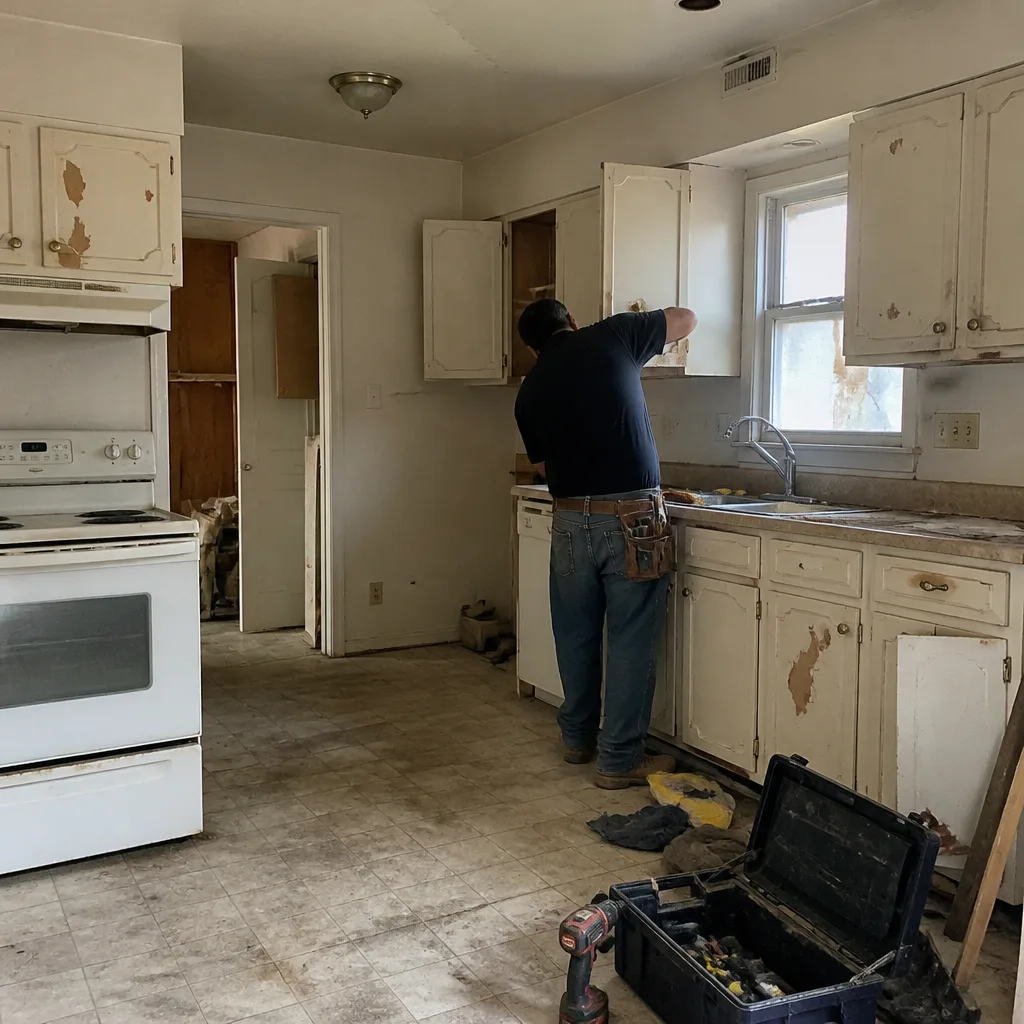 Before
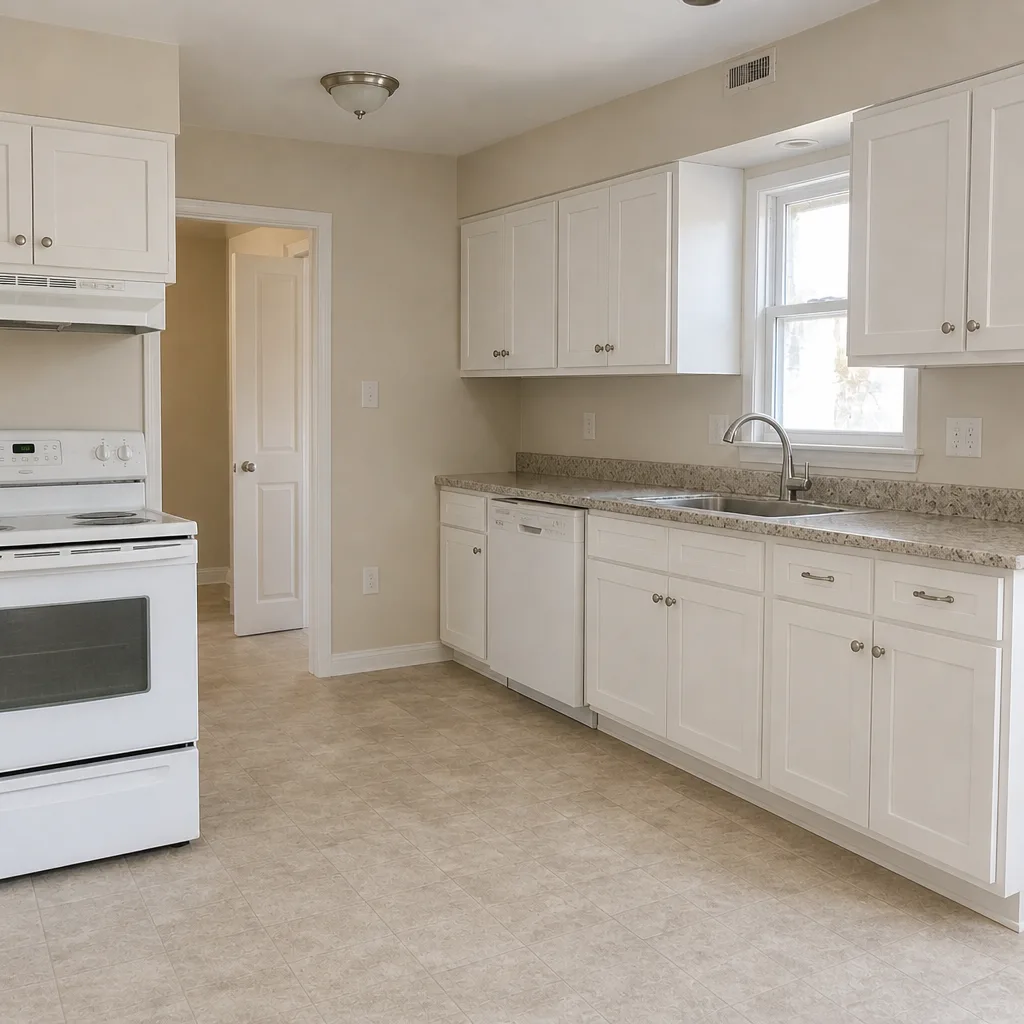 After
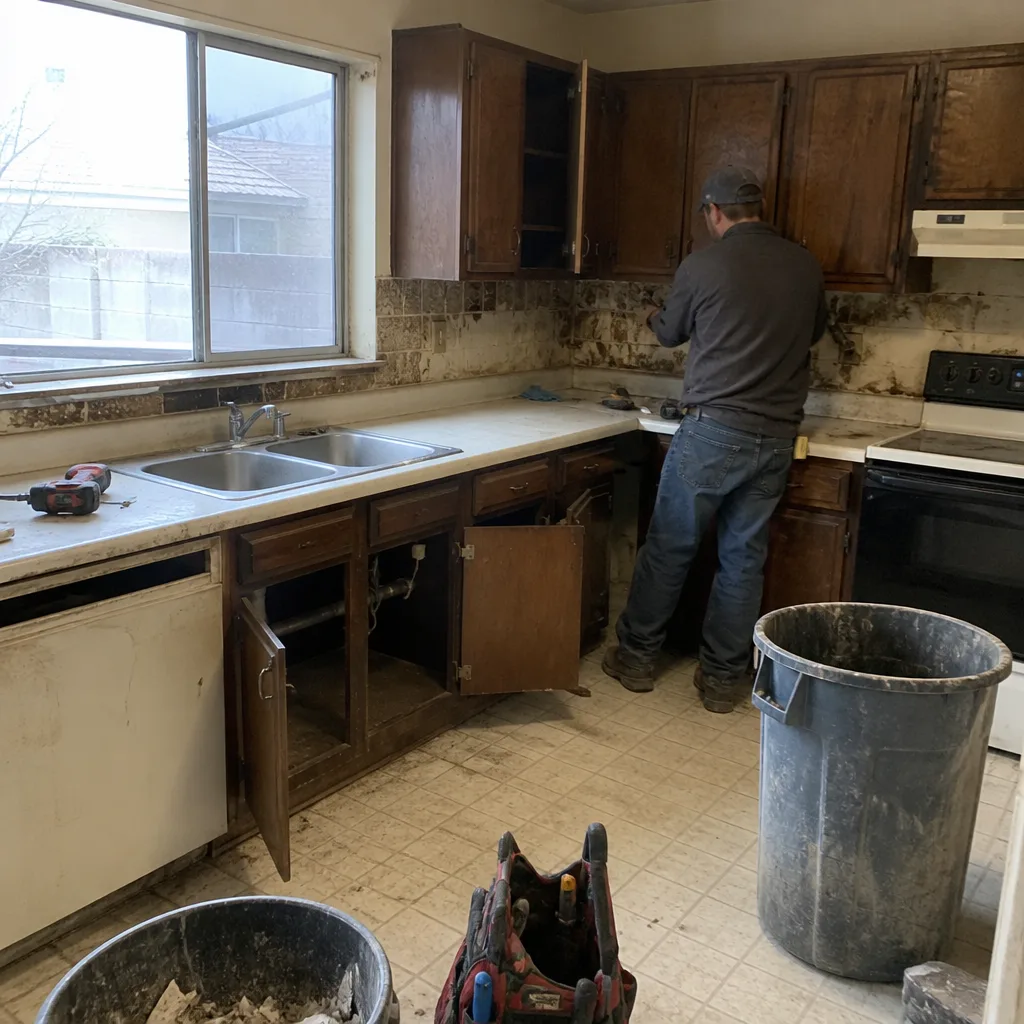 Before
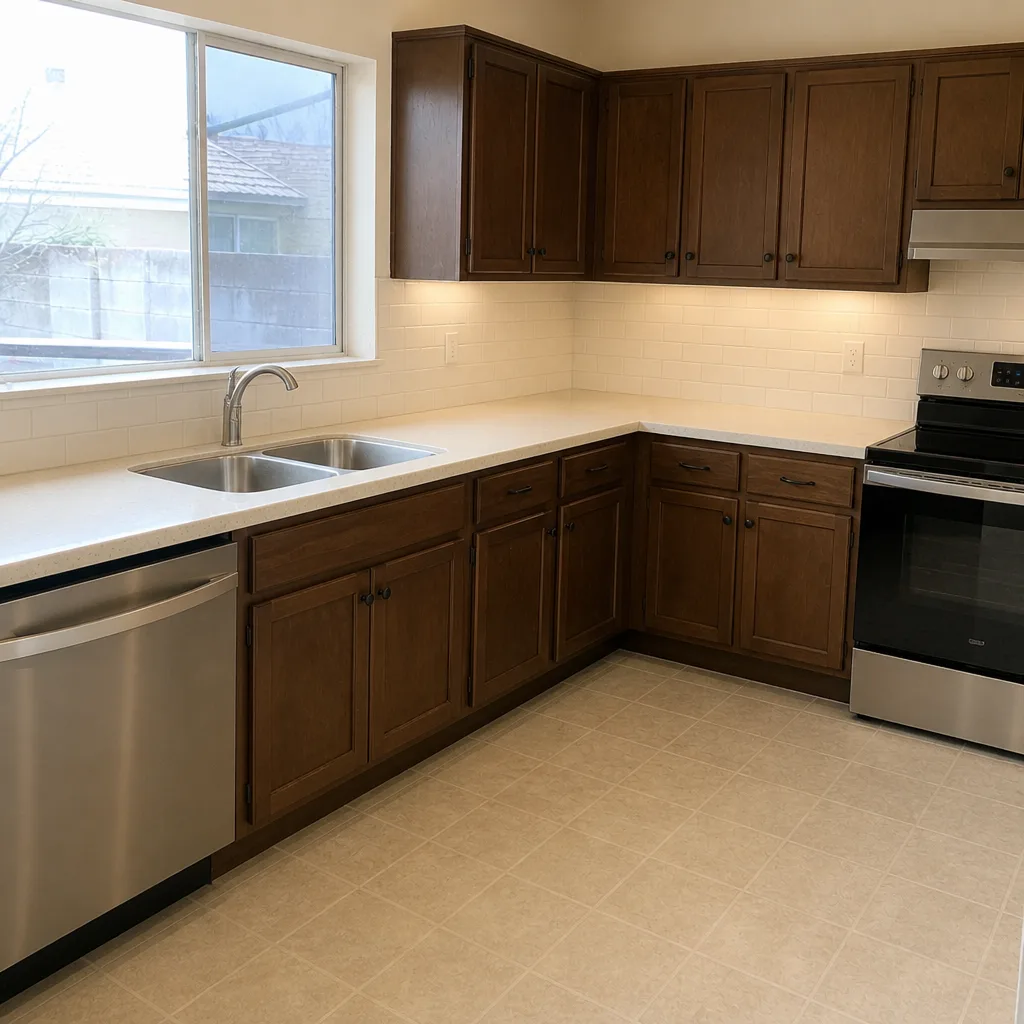 After
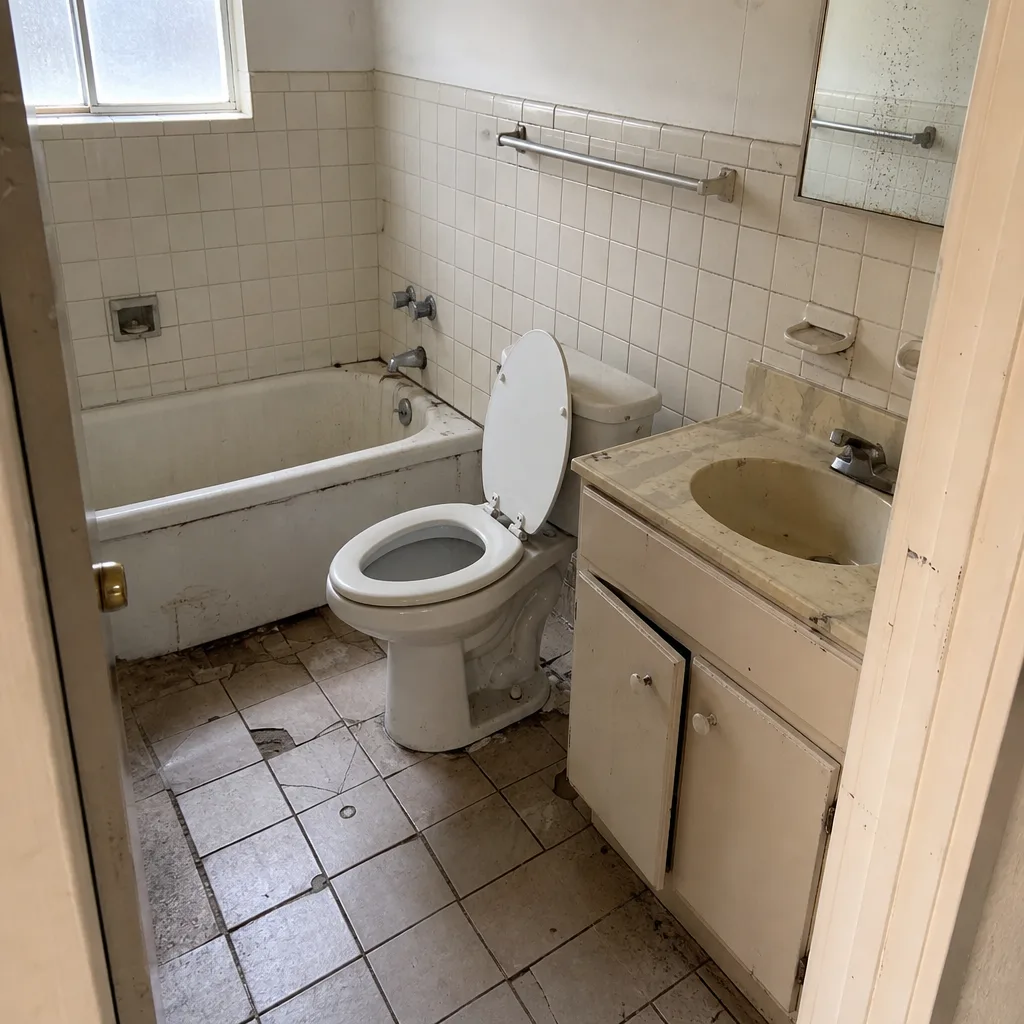 Before
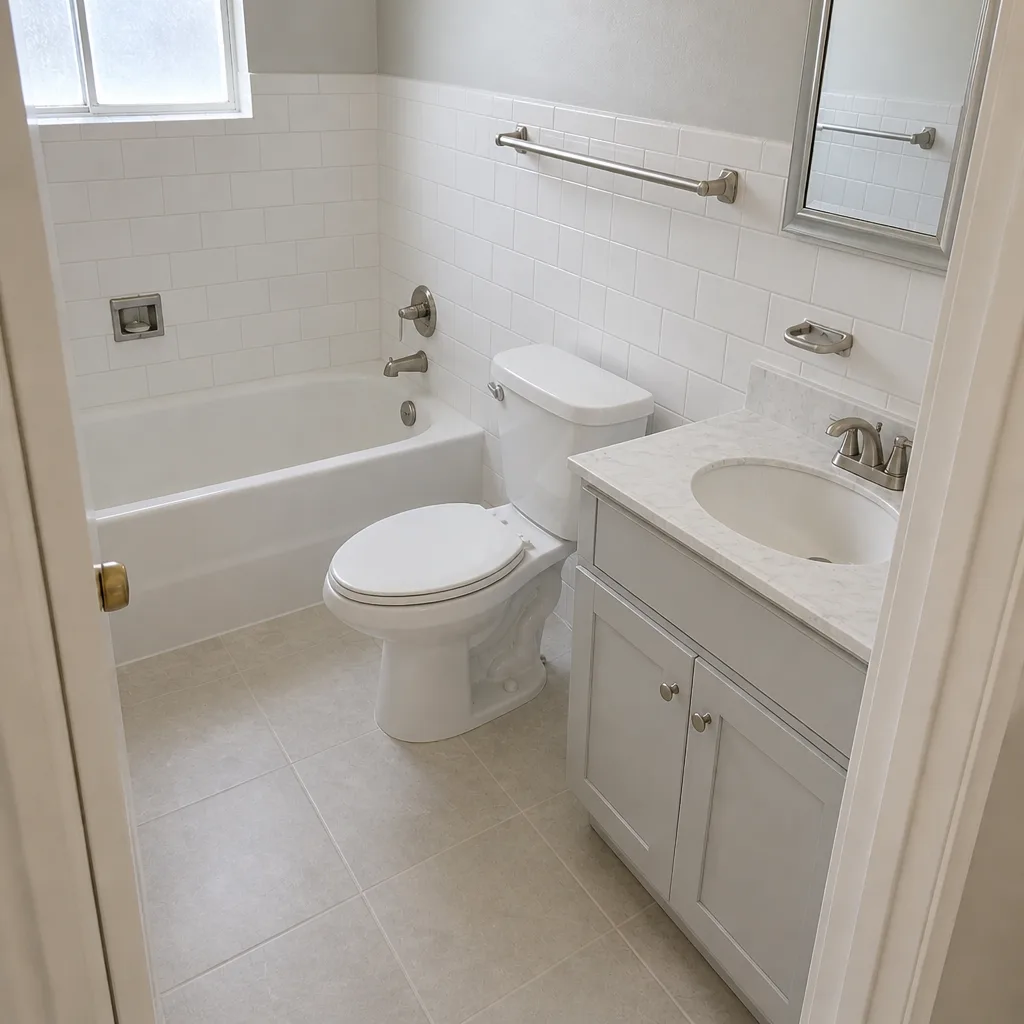 After
When to Call a Professional
Call when the project crosses any of the five tests: it needs a permit, it involves a high-performance assembly, it’s adjacent to warranted work, you plan to sell inside five years, or the failure would be invisible and expensive. That covers structural changes, waterproofing, insulation, HVAC, electrical beyond a fixture swap, plumbing apart from a compatible fixture replacement, decks, patio covers, and any bathroom or kitchen that moves plumbing or wiring behind the wall. Mason Remodeling Mesquite offers free estimates in Mesquite – call (844) 797-3609 to get a written price before any work starts. For a full sense of what we handle, see our kitchen remodeling in Mesquite work or start at our Mason Remodeling Mesquite home page. If you’re pricing a larger project, our team can help you plan a bathroom remodel in Mesquite to a fixed scope, and from there the rest of the home becomes easier to sequence.
Frequently Asked Questions
Yes, on your primary residence, Nevada lets you act as an owner-builder and pull permits in your own name for most work. The limits are that the property must be your primary residence, you become the responsible party for code compliance and inspection, and the work may require disclosure when you sell. Professional work adjacent to your owner-builder scope still has to meet the same code standard.
Yes. Owner-builder and unpermitted work appears in the permit record, must generally be disclosed at sale, and can trigger credits or price reductions. Within roughly five years of the work, buyers and lenders treat self-performed permitted work with more caution, and unpermitted structural changes can complicate financing. Call (844) 797-3609 if you want a professional scope before a sale so you know what a buyer will see.
Mesquite’s climate raises the performance bar. Summer heat over 110 degrees, intense UV, near-zero humidity, and sudden monsoon rain place more stress on insulation, waterproofing, and HVAC than a moderate climate does. A small installation error that costs a little performance elsewhere can cause early failure here and drive cooling costs up year after year.
Self-performed work directly adjacent to professionally warranted work can void the guarantee on the neighboring scope. Workmanship guarantees typically require that the warranted assembly not be altered by anyone else, so adding a tile niche or a fixture into a warranted install can be grounds to deny the claim. Our written guarantee states coverage terms plainly, including what’s covered, what’s excluded, and for how long, and a free return visit is provided if a repair or installation fails.
Interior painting, cosmetic refinishing, fixture swaps within existing rough-in, landscaping, and demolition after abatement checks. Those share three traits: no permit trigger, no structural change, and no high-performance assembly that fails invisibly. When a project needs a permit or moves plumbing, electrical, HVAC, or structural elements, a professional’s written price is usually cheaper than the correction.
Once a licensed contractor touches the project, any adjacent homeowner-performed work is held to the same code standard, and an inspection can flag both. That’s why a mid-project handoff needs a professional review of what’s already built before the next phase starts. Get the scope and the written price upfront so there are no surprises: call (844) 797-3609 for a free estimate.
The Bottom Line
The DIY decision in Mesquite isn’t about whether you’re handy. It’s about permit exposure, warranty validity, resale consequences, and the higher performance bar that desert construction demands. Cosmetics and demolition are yours to take on. Anything structural, waterproofed, insulated, or on the mechanical systems belongs in professional hands, and the written price tells you exactly what that costs before you start. If you’re near the line, get the estimate and let the numbers decide. That’s the whole purpose of a free quote.
Call (844) 797-3609 to schedule your free estimate with Mason Remodeling Mesquite. We deliver a written price before any work begins, every time, and a live person answers the phone around the clock.
Written by the team at Mason Remodeling Mesquite.