Last updated November 17, 2026






Free written scope consultation - allowances, timeline, and change-order rules on paper before a single trade is scheduled
Kitchen Remodeling Warning Signs Every Homeowner Should Know
A contractor who can’t name the tile setter doing your backsplash isn’t just disorganized. That anonymity is exactly how liability disappears when something goes wrong. Most homeowners don’t get burned by obviously bad remodelers with shattered reputations; they get burned by subtle red flags they talked themselves out of in the weeks before signing. We’re Mason Remodeling Mesquite, and we’ve walked into enough half-finished kitchens to recognize the pattern. This guide names the specific behaviors, documents, and job-site conditions that signal a kitchen project is headed for trouble, with real numbers so you can size up any bid before you sign it.
Styles & brands we work with
- Kitchen remodeling
- Bathroom remodeling
- Home additions & ADU
- Roofing
- Windows & doors
- Driveway & pavers
- Fence
Quick Answer
The most reliable warning signs of a bad kitchen remodeling contractor are a bid without line-item pricing or a written scope, crew members you can’t identify by name and photo, work starting before permits are pulled, and large cash deposits demanded before any milestone is complete. Any one of these should make you pause. Two or more together mean you should walk away and get another written estimate.
Table of Contents
- The Bid Document Test: What a Real Written Price Looks Like
- Crew Anonymity Is a Risk Factor, Not a Personality Quirk
- On-Site Warning Signs During the Project
- Permit Red Flags in Mesquite Kitchen Remodels
- Financial Red Flags Specific to Kitchen Work
- Post-Demo Discovery: Legitimate Surprises vs. Manufactured Ones
- What Material Substitutions Tell You
- Common Mistakes to Avoid
- When to Call a Professional
- Frequently Asked Questions
- The Bottom Line
The Bid Document Test: What a Real Written Price Looks Like
Ask five contractors for a kitchen bid and you’ll get three different species of document: a napkin number, a lump-sum total, and a written price with line items. Only one of them protects you. The lump sum is the sneaky one, because it looks official. It has a company logo and a total dollar figure, but it doesn’t tell you what’s in it. When the cabinets arrive and the crown molding wasn’t counted, the lump sum becomes the starting point for a conversation you don’t want to have.
A written price should break down the work into discrete, named pieces. Use this checklist when the bid lands in your inbox:
- Cabinetry named by brand and line: a bid that says “quality cabinets” tells you nothing. A real bid names the manufacturer and door style, because that’s what determines the cost.
- Countertop material named with square footage: “granite” is not a price. “Cambria quartz, approximately 42 square feet, template and install included” is a price.
- Demolition and disposal listed separately: hauling old cabinets and appliances has a real cost, and it should show up on paper, not in a surprise invoice.
- Permit fees itemized: in Mesquite, kitchen work that moves plumbing, gas, or electrical requires permits. A bid that doesn’t mention them isn’t cheaper; the money just moves to your column later.
- A statement of exclusions: a good bid tells you what it does NOT cover. That’s how you know the writer thought about it.
- A stated start date and an estimated completion window: not a promise, but a plan.
In our experience across Mesquite kitchens, the vague line items (“miscellaneous carpentry,” “materials allowance, TBD”) are the exact places where change orders breed three weeks later. An allowance of $800 for backsplash tile that a homeowner picks at $1,400 is not a change order; it’s a bid that was never honest about scope. Specification-grade material partnerships on cabinetry, surfaces, and fixtures let a remodeler price real products up front rather than guessing.
Crew Anonymity Is a Risk Factor, Not a Personality Quirk
Here’s the scenario that plays out more than it should. A homeowner in Mesquite signs a contract with a company they interviewed. Two weeks into the job, three new faces show up and start tearing out drywall. Nobody introduces them. Nobody says who they work for. Six months later, the tile to the left of the range is cracked, and no one can say whose employee laid it. The paperwork trail is gone because the person who installed it was never on the paperwork.
Anonymity on a job site is how liability evaporates. A crew member who shows up with no name, no photo, no badge, and no paperwork is a crew member who can’t be held to a warranty. When you ask “who is doing my tiling?” the answer should be a name, not a shrug.
The Threshold Standard solves this at Mason Remodeling Mesquite with a process rather than a promise. Every technician is background-checked and identity-verified before arrival. You receive their name and photo before the visit. They arrive in a clean marked uniform, introduce themselves at the door, and show a photo ID badge. If a subcontractor is part of your kitchen project, you’ll know who they are, why they’re in your home, and what they’re working on that day.
If you’re home alone during the day, or you have kids or aging parents in the house, this matters more than the tile color. Ask any contractor you interview: “Will I know who’s coming and when?” The answer tells you everything about the company’s expectations for its crew.
On-Site Warning Signs During the Project
Most of these show up in the first two weeks. Watch for them with a notebook, and don’t talk yourself out of the ones that bother you.
- Work starts before the permit is posted. A permit card should be visible on-site, or the company can show you its number and status. Demolition happening while the permit is “in the mail” is a risk you’re carrying, not the contractor.
- Subs you’ve never been introduced to. Plumbers, electricians, and tile setters should be introduced the way anyone else is introduced. If a stranger spends the day in your kitchen and no one tells you their name, ask.
- No dust barrier, no floor protection. In Mesquite’s dry climate, demolition dust travels. A serious crew seals off the kitchen with plastic, tapes the seams, uses a mat at the door, and protects flooring before the first cabinet comes out.
- The schedule changes without explanation. Small shifts are normal. Days of silence and a crew that doesn’t show up Monday through Wednesday are not.
- Materials arrive mismatched or unbranded. If the box says nothing and the cabinet door is a different color than the sample, stop the job and ask. (More on this below.)
- Your contact becomes hard to reach. The job lead who called you back in 20 minutes during the sales phase and doesn’t return calls in three days once the deposit clears is telling you something.
Written documentation goes a long way. A remodeler who provides a written price before work starts, a 365-Day Done Right Promise on completion, and a free second visit if a repair fails, gives you a written record to point at when something feels off. That’s not a substitute for a confident crew; it’s a reminder that confident crews are willing to put promises in writing. If you want to see how this applies to a full project, our write-up on kitchen remodeling in Mesquite covers the workflow we follow.
Permit Red Flags in Mesquite Kitchen Remodels
Permits aren’t paperwork for its own sake. They are the inspection that catches a bad gas line behind your range before it’s a problem, and the record that a buyer’s inspector will pull when you sell. In Mesquite, kitchen work touching plumbing, gas, or electrical needs a permit. Work that changes the footprint, adds an island, moves a window, or relocates a sink almost always does. Cosmetic swaps (cabinet doors, paint, backsplash over existing drywall) often don’t; but the contractor should be able to tell you which category your project falls into, not guess.
Here’s what to watch:
- “We don’t need permits for that.” Often true, sometimes not. Ask for the reasoning, not just the answer.
- No permit card on-site after demolition. The card usually goes up before demo, or the same day. If it appears after you ask, note that.
- Inspections that never happen. A permitted job has scheduled inspections. If the drywall is closed up with no inspection before it happened, that’s a red flag.
- Permit “handled” but never shown. You should see the permit number on the contract or a copy. If a homeowner can’t see which jurisdiction issued the permit, the claim is unverifiable.
Mesquite sits in Clark County, but building permits are issued by the City of Mesquite for properties within city limits, with county jurisdiction for some outlying areas. A contractor who works in Mesquite with regularity knows which desk a given address files under. If they can’t tell you where the permit goes, that’s information.
Financial Red Flags Specific to Kitchen Work
Kitchen remodels are the most expensive room in the house to remodel, and they’re also the most common place for payment schedules to go sideways. Here’s what to watch.
- Large upfront cash deposits. A deposit is normal, typically enough to cover the first materials and initial labor on big-ticket items like cabinetry. Cash demands of 50% or more before any materials are ordered or any work is scheduled are a warning sign. Money that vanishes is hard to recover.
- No lien waiver process. Lien waivers are simple written documents that confirm a subcontractor or supplier has been paid and won’t file a mechanic’s lien against your property. A remodeler who doesn’t offer them is a remodeler whose payments to subs are your risk. Ask how they handle waivers at each milestone.
- No payment milestones. The money should be tied to progress: deposit before materials, payment after demo, payment after rough-in and inspection, payment after cabinet install, final payment after punch list. Payments tied to fixed calendar dates are less protective than payments tied to milestones.
- Change orders that ignore the contract. Change orders are normal. A verbal “we’ll need to add a few hundred for that” with a number that keeps growing needs a written change order in your hand before work continues.
- No written guarantee terms. “We guarantee our work” is a slogan. “365 days from the date of completion, covering labor and materials, with a free return visit if a repair fails” is a guarantee. Ask for the terms in writing.
One more: no line-item pricing on the invoice. If the invoice just says “kitchen remodel – balance due,” you don’t know what you paid for. For comparison, a written, itemized bid for a bathroom remodel in Mesquite looks the same way; every room we bid gets the same document, no matter the scope.
Post-Demo Discovery: Legitimate Surprises vs. Manufactured Ones
Open the walls in any older kitchen and you’ll find something. Water damage under the sink, outdated wiring, a joist that needs sistering, a vent that vents nowhere. Those discoveries are part of the work, and a good remodeler will stop, take a photo, write down what was found, and bring you a priced change order before anyone touches it.
Manufactured discoveries look different. Here’s how to tell them apart.
Legitimate discovery
- You get a photograph of the actual condition.
- The written change order arrives before the work proceeds, with a price and a scope.
- The scope matches what you saw in the photo. It doesn’t grow by “while we’re in there.”
- There’s a rationale: code requirement, structural issue, water damage.
- You have time to consider alternatives and ask questions.
Manufactured discovery
- The explanation arrives verbally and the work proceeds the same day.
- The written change order is “to be provided later” or doesn’t arrive at all.
- The scope grows every week. Drywall becomes drywall plus electrical plus a new vent plus framing.
- The rationale is vague: “the code,” “you can’t do it the other way,” “everyone does it this way.”
- You’re told there’s no time to wait.
In Mesquite kitchens in our experience, older homes often do show surprises: undersized electrical for modern appliances, or plumbing that has aged past its parts. Those are real. What’s not real is a surprise discovery list that shows up after the deposit is paid and expands by 30% over a month of work. Ask any contractor to put in writing how they handle discoveries, before you sign. This is the single most common way kitchen budgets break, and it costs nothing to ask the question up front.
What Material Substitutions Tell You
Kitchen projects are material-heavy, and material swaps are one of the quiet ways a project goes wrong. The brand on the sample tile isn’t what’s in the box. The cabinet door is a slightly different shade than the display. The countertop is a different slab than the one you approved. Sometimes that’s a supply issue and gets resolved. Sometimes it’s a contractor hoping you won’t notice.
Watch for:
- Unbranded boxes on install day. Drawer glides that don’t match the cabinet brand, or fixtures without manufacturer packaging, are worth asking about.
- No written material list. Your contract should name every brand and product in the project, including cabinetry, surfaces, and fixtures. If any of these read as “equivalent,” ask for the actual name before work starts.
- “We couldn’t get that, so we used X.” Reasonable when disclosed and approved. Not reasonable when it’s announced after install. The Material Agreements (like cabinetry manufacturers, quartz and granite brands, and fixtures) exist precisely so a homeowner knows exactly what’s arriving.
This is where specification-grade partnerships matter. When a remodeler can source cabinetry, quartz surfaces, and Kohler or Moen fixtures through vetted manufacturer channels, there’s less room for the “whatever was cheaper this week” substitution. It also means your bid names real products rather than generic descriptions.
Common Mistakes to Avoid
- Accepting a handshake bid. Even for small kitchens. The number needs to be in writing before any material is ordered, because a verbal estimate has no boundary and the final bill has no ceiling.
- Paying deposits before the permit is pulled. In Mesquite, permit costs and timelines vary. A deposit that arrives before the permit card is up is money that becomes hard to get back if the project stalls.
- Skipping the subcontractor introduction. If a plumber or tile setter shows up and no one names them, ask. It takes 15 seconds and it’s your kitchen.
- Letting the change order process go verbal. Once one change is verbal, the pattern is set. Insist on written change orders for every scope shift, no matter how small.
- Assuming the warranty is automatic. Ask for the terms in writing. A real guarantee states what is covered, what is excluded, and for how long. Ours runs 365 days from the completion date, and includes a free second visit if a repair fails.
- Ignoring the schedule shift. A gut renovation of a Mesquite kitchen with permit and inspection delays can run six to eight weeks or more. When a promised four-week timeline slips to five, that’s normal. When it slips to eight with no explanation, ask for a revised written schedule.
- Skipping the walk-through at the end. Punch lists get shorter if you do them in person, with the crew lead, on the scheduled date. Don’t accept a text-message completion notice as a final inspection.
When to Call a Professional
Some warning signs are worth a conversation with your current contractor. Others are worth calling a second company for a second written bid. Call a professional when a contractor can’t or won’t show you the permit, when a change order arrives without a written scope, when the crew on your job site has changed three times in a month and no one has introduced the new crew, or when the warranty terms are verbal only. Also call if you’re just starting to look and you want a second written price to compare against the first. Mason Remodeling Mesquite offers free estimates in Mesquite with a written price before any work starts, always. Call (844) 797-3609 to schedule yours. And if you’re still mapping out a full project scope that includes work beyond the kitchen, our overview of what we do as a general contractor in Mesquite covers how a whole-project plan comes together.
Frequently Asked Questions
The most reliable warning signs are a bid without line-item pricing, a contractor who can’t or won’t name the crew coming to your home, work starting before permits are posted, and requests for large cash deposits with no payment milestones. These aren’t personality quirks; they’re structural risks that put your money, your home, and your warranty exposure on the line. Call (844) 797-3609 for a second written estimate if you’ve seen two or more.
Kitchen remodels in Mesquite generally run from about $25,000 for a cosmetic refresh (cabinet refacing, new countertop, backsplash, paint) to $35,000-$65,000 for a mid-range full kitchen with new cabinetry, quartz counters, appliance swaps, and updated electrical, and $75,000-$120,000 or more for a high-end kitchen with layout changes, custom cabinetry, and premium surfaces. Costs vary with square footage and scope. Call (844) 797-3609 for a written price specific to your kitchen; estimates are free.
Yes, for most kitchen remodels that touch plumbing, gas, electrical, or the layout. Mesquite properties within city limits file with the City of Mesquite; some outlying areas file with Clark County. Cosmetic changes (cabinet doors, paint, backsplash over existing drywall) often don’t require a permit. A contractor should be able to tell you which applies to your project before demolition starts. Call (844) 797-3609 if you want a straight answer on your address.
No. A deposit that covers first materials is normal; a 50%-or-more cash deposit before materials are ordered and before a start date is set is not. Payments should be tied to milestones (materials, demo, rough-in and inspection, cabinet install, punch list) and paired with lien waivers from each subcontractor. Ask for the payment schedule in writing before you sign; a legitimate remodeler provides it as standard.
Legitimate discoveries (water damage, code issues, undersized electrical) get photographed, written up, and priced in a change order before work continues. You should see a photo and a written scope. Manufactured discoveries arrive verbally and expand week by week. If it’s the second, stop the work and get a second opinion. Call (844) 797-3609 for a free estimate on a second bid.
A written kitchen bid should include line-item pricing for cabinets (brand and line), countertops (material and square footage), fixtures (named products), demolition and disposal, permits and inspection fees, a statement of exclusions, a start date and estimated completion window, and the payment schedule. Anything “miscellaneous,” “TBD,” or “allowance” should be flagged as a specific place the price could grow. Call (844) 797-3609 for a written bid on your Mesquite kitchen.
The Bottom Line
Most kitchen remodel disasters aren’t visible on day one. They start as small red flags: a bid with a lump sum and nothing behind it, a crew that changes every week with no introductions, a permit card that never arrives, a deposit that disappears the day the work stops. Catch them early and you have choices. Catch them late and you have a punch list and an attorney. The most useful habit is simple: ask for it in writing. Written price, written permit number, written crew names, written change orders, written guarantee terms. Mason Remodeling Mesquite does this on every kitchen project because it’s the only way to build. If you want a second written price on your Mesquite kitchen, look at what we do at Mason Remodeling, then call (844) 797-3609 to schedule a free estimate. A live person answers every call, day or night.
Written by the team at Mason Remodeling Mesquite.
See the difference
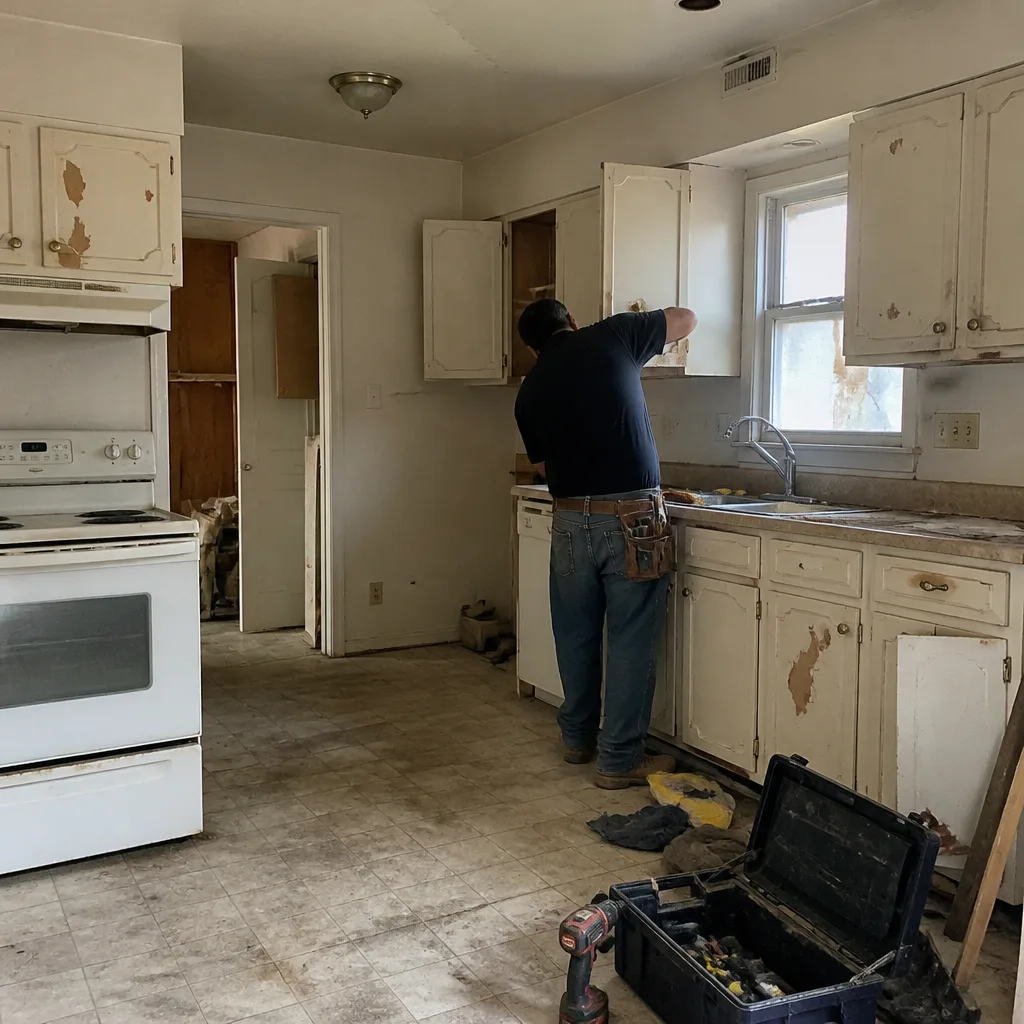 Before
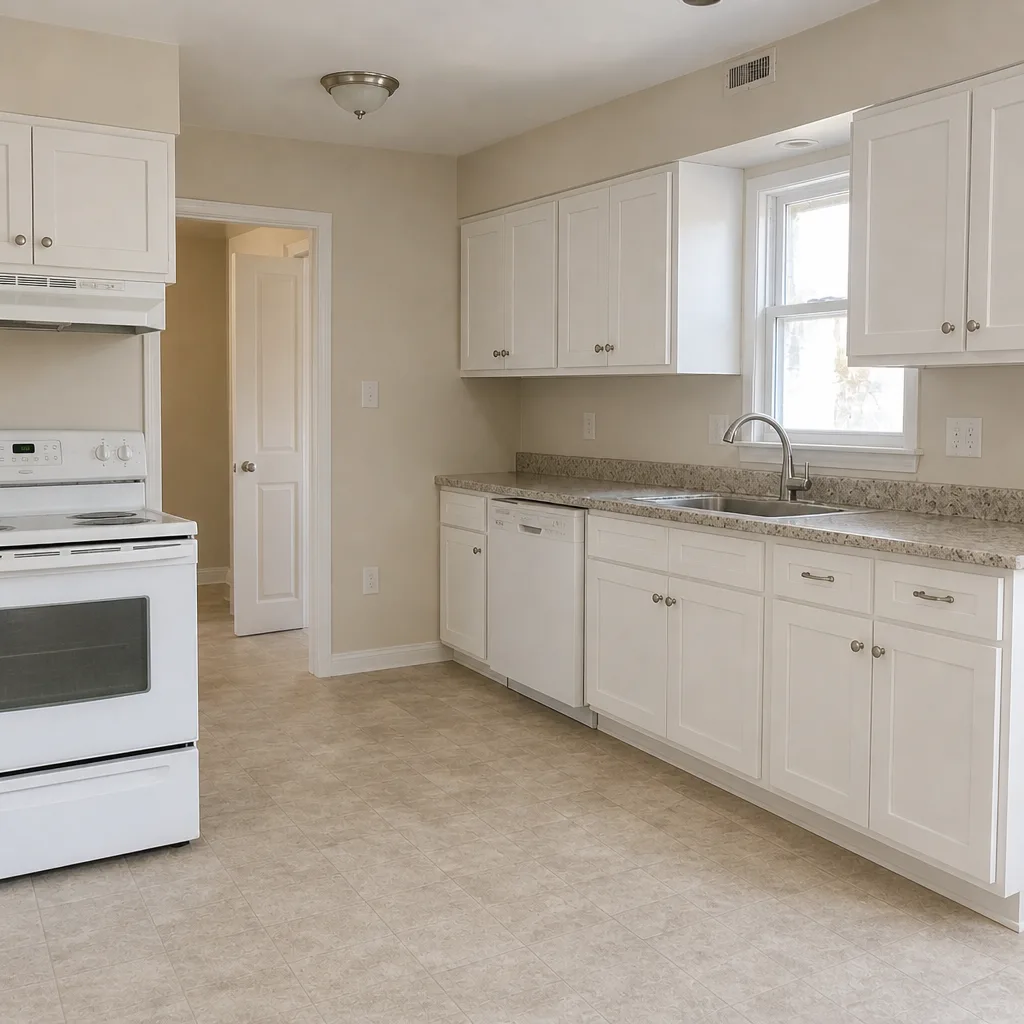 After
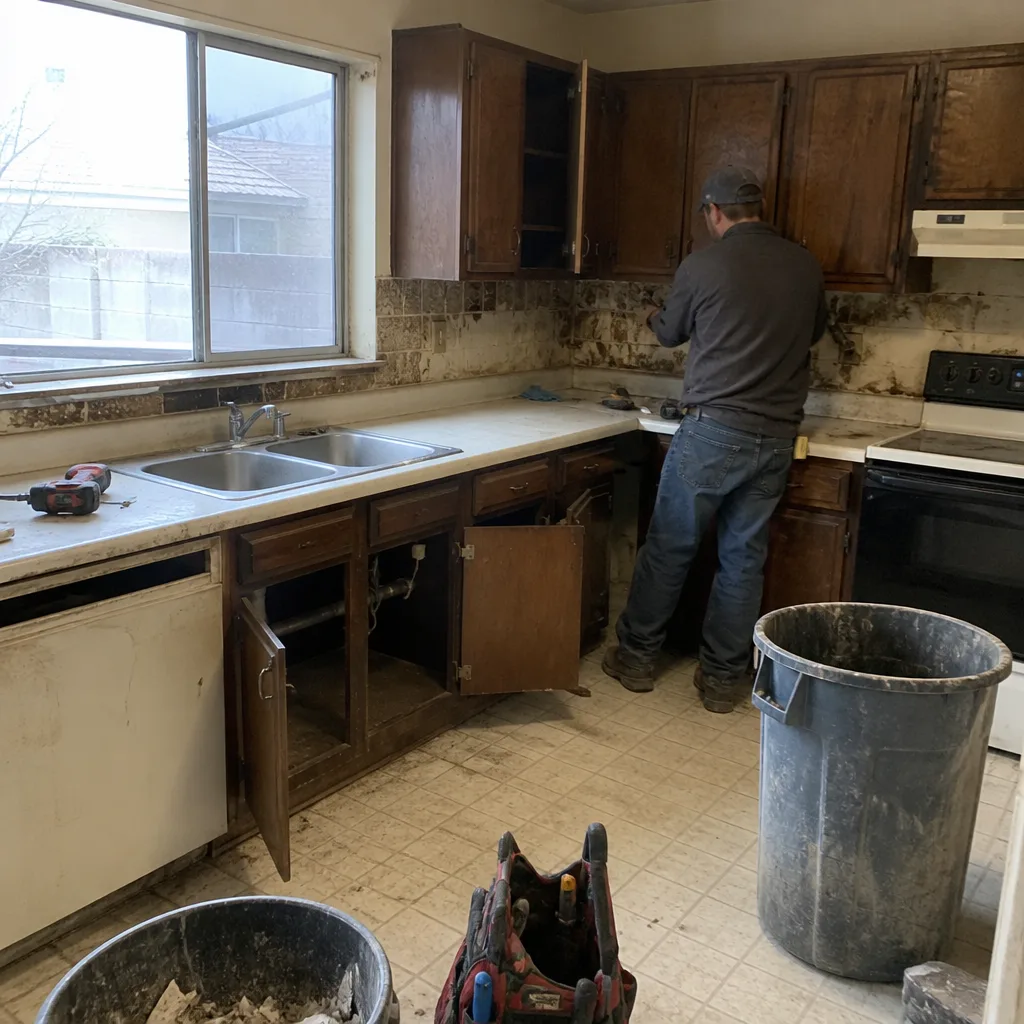 Before
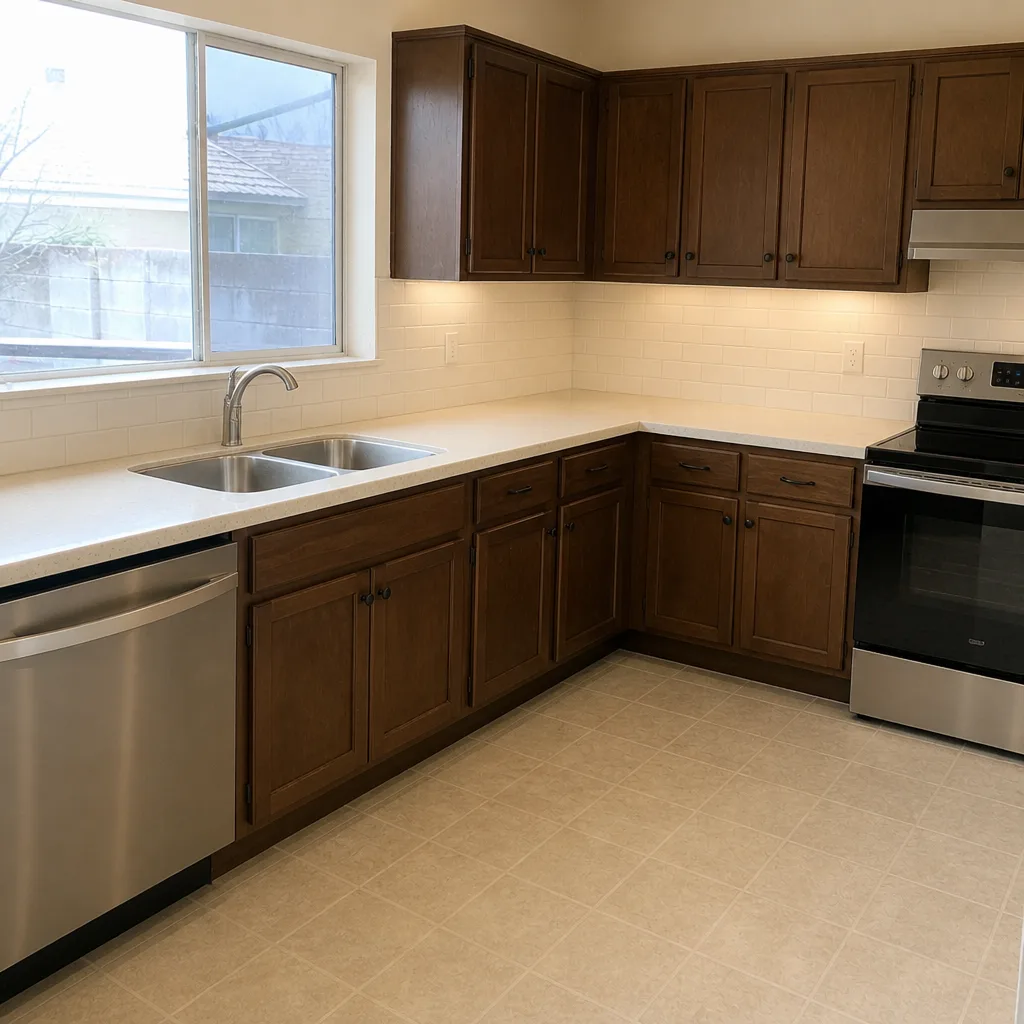 After
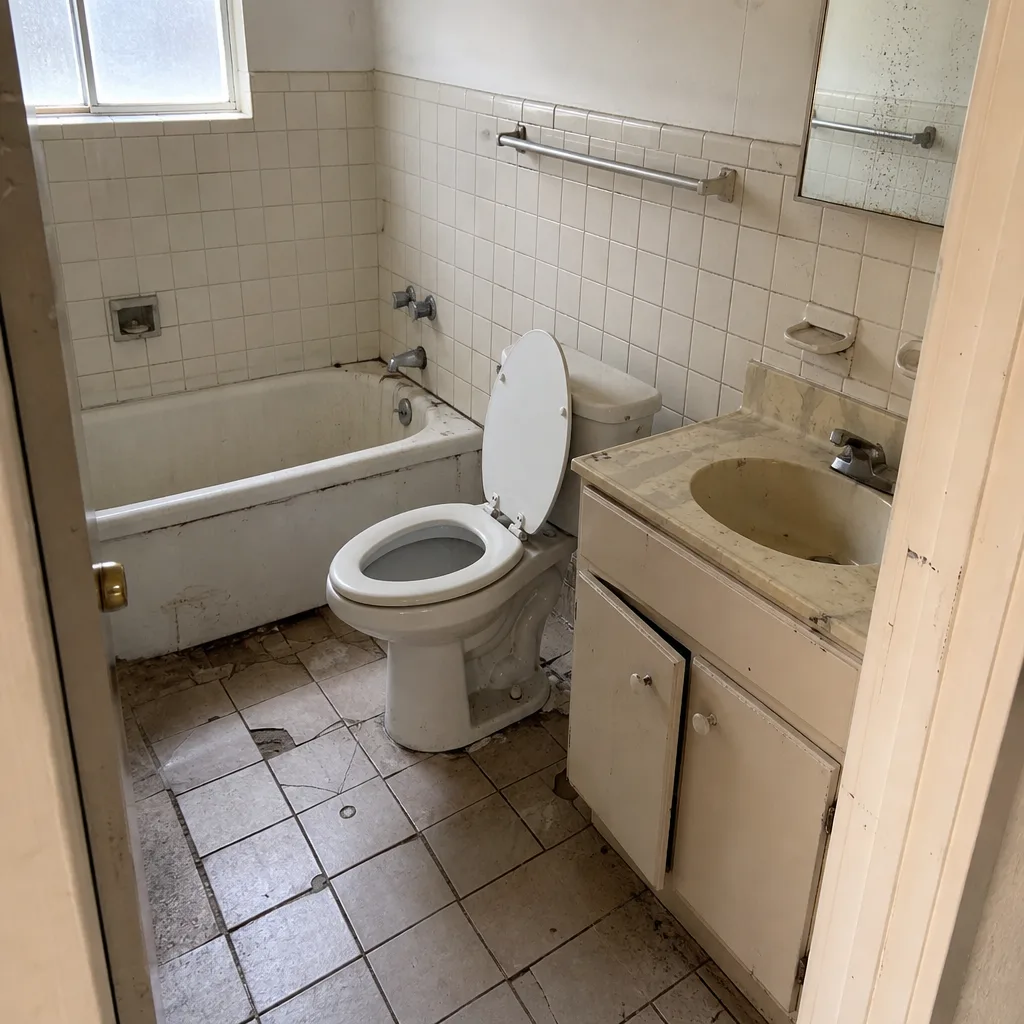 Before
 After